
Competitive
Racing
Racing
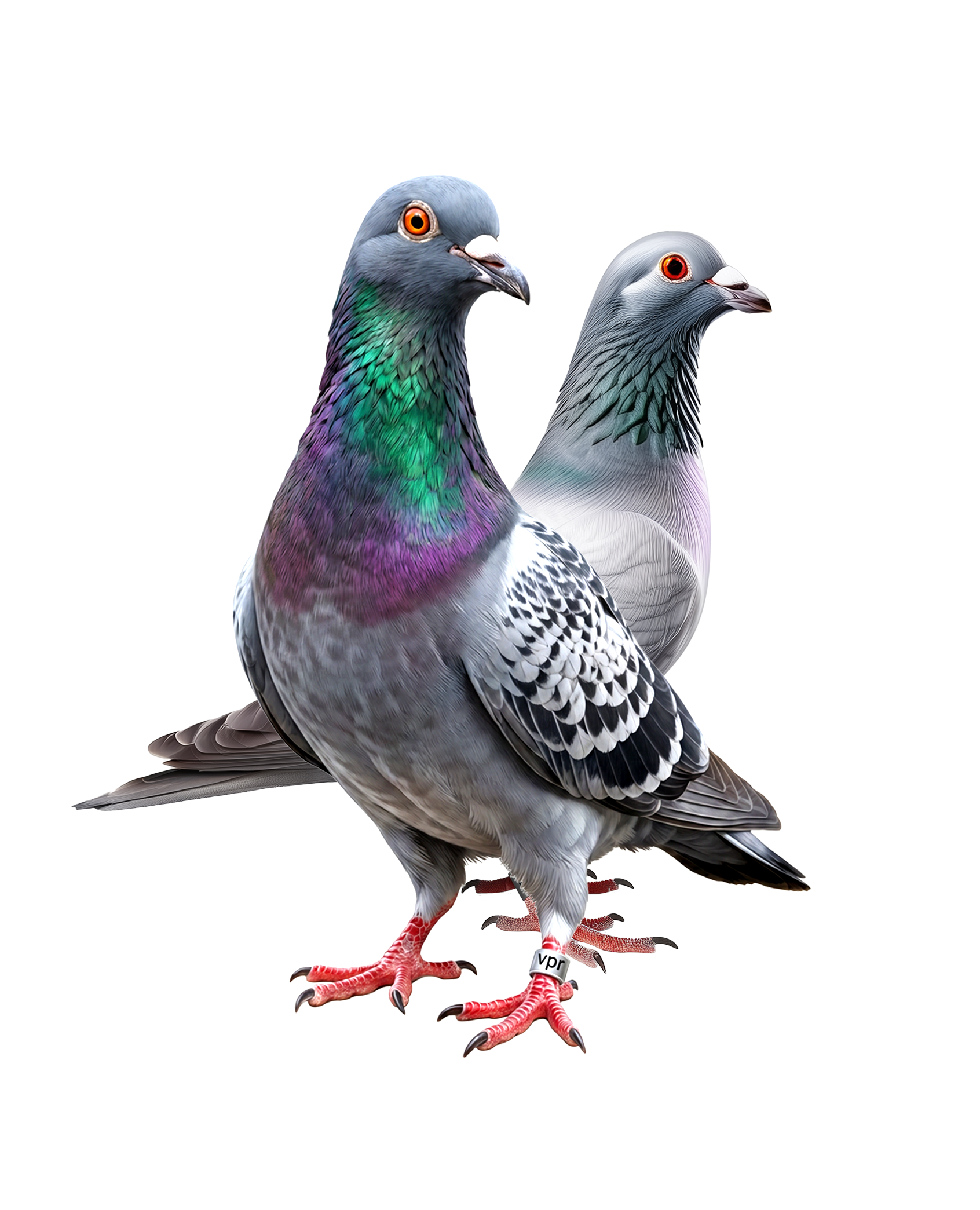
Every pigeon starts with potential. What it becomes depends on how you train it, where you race it and what you learn along the way.
A VPR pigeon enters your Loft with a fixed identity: rarity, generation, bloodline, breed type, genotypes, category, gender, color and a built-in speed score. It also begins with ten core abilities that help shape how it handles competition.
Those starting numbers matter, but they do not write the result. A less rare pigeon can still be the better choice when its profile, experience, distance fit and condition match the race. A higher rarity can offer stronger starting potential and shorter recovery, but it is not a win button. Potential gives you options. Decisions turn those options into a record
Abilities do not act alone. They work together to create the way a pigeon responds to distance, resistance, fatigue, navigation demands and changing race situations. Read the complete shape of the pigeon—not the single highest number.Abilities and what it tells the player
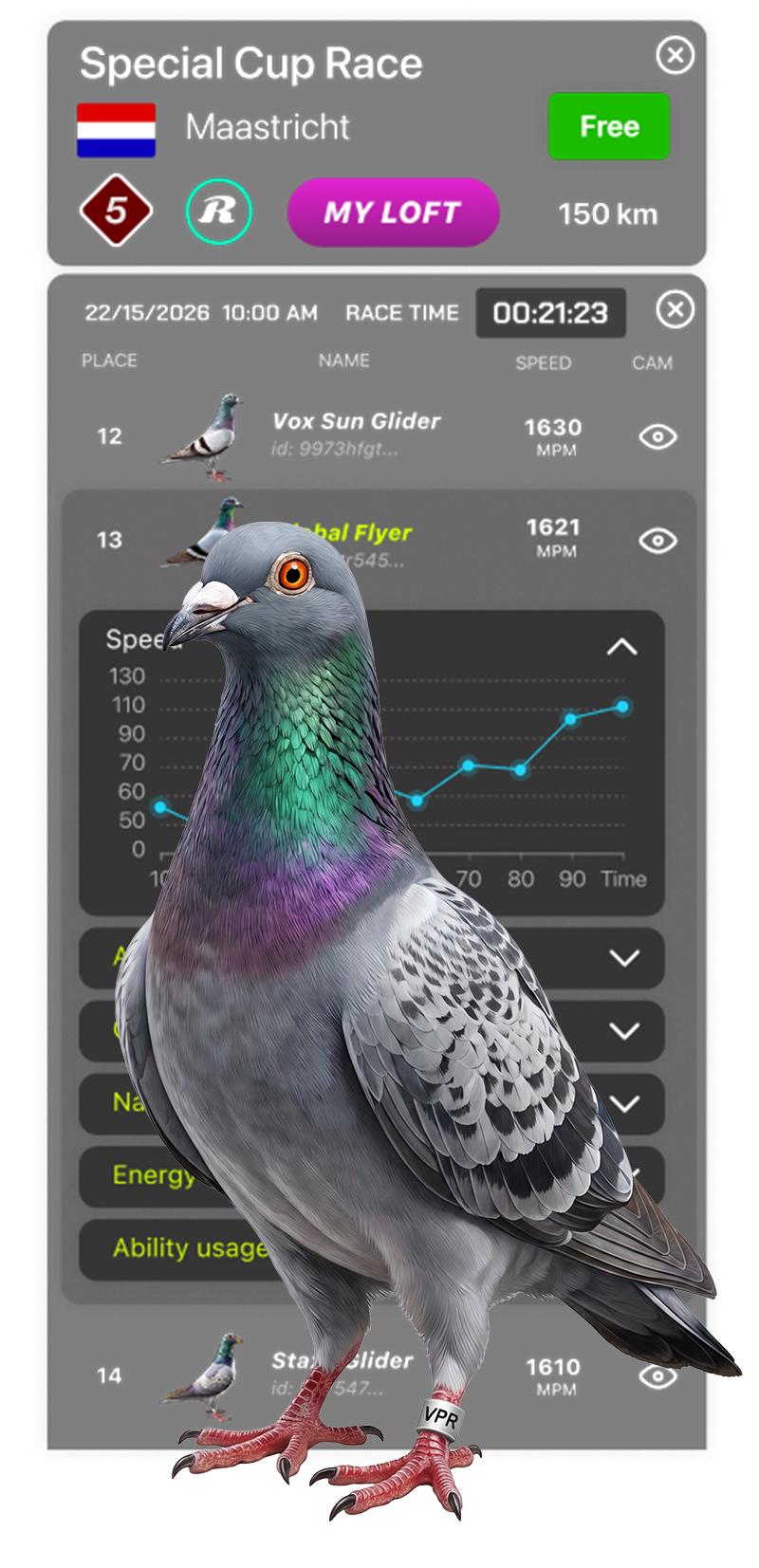
Racing is how a pigeon builds experience. Every completed race adds XP. XP increases level, and levels can unlock stat improvements over time. That makes competition more than the place where performance is measured. It is also how the pigeon develops.Choose races that reveal useful information instead of treating every entry the same. A short event can test acceleration and speed fit. A harder distance can expose stamina, endurance, health, fitness, orientation and navigation. The right development path is not the route with the most races. It is the route where each race has a purpose.
A profile shows potential. A race shows how that potential behaves under pressure. One pigeon may look strong on paper but lose efficiency when the distance grows. Another may appear ordinary at first and keep delivering when weather, fatigue and navigation demands become more severe.Do not crown a champion after one win or discard a pigeon after one loss. Compare similar distances, routes and conditions. Watch how the bird performs across a pattern of races. Proof is not a single result. It is consistency when the question changes.
A profile shows potential. A race shows how that potential behaves under pressure. One pigeon may look strong on paper but lose efficiency when the distance grows. Another may appear ordinary at first and keep delivering when weather, fatigue and navigation demands become more severe.Do not crown a champion after one win or discard a pigeon after one loss. Compare similar distances, routes and conditions. Watch how the bird performs across a pattern of races. Proof is not a single result. It is consistency when the question changes.


